Ɨ
Schedule consultation

Hair Restoration

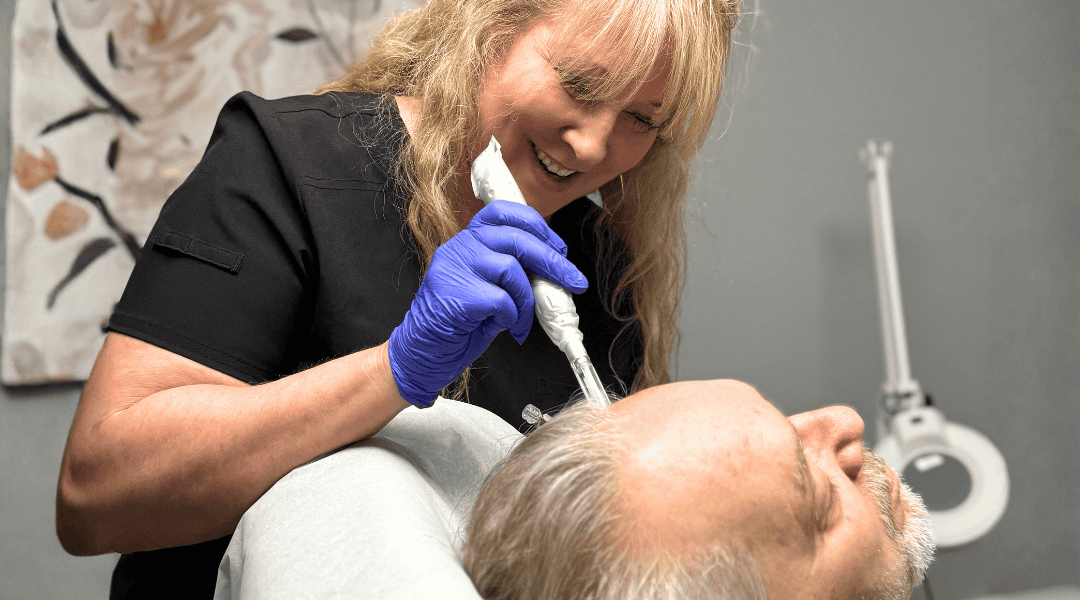
Hair loss is common, complex, and deeply personal. Our Hair Restoration treatments are designed to support regrowth and hair density when the underlying cause is appropriate for treatment. Because different types of hair loss require different approaches, we begin with a consultation to ensure this treatment is right for you.

Our approach uses ExosomesĀ to support the scalp environment and hair follicle function in patients with specific, non-scarring forms of hair loss.

Book a consultation at one of our locations:

Hair Loss Types

Our Hair Restoration treatments are indicated only for non-scarring forms of hair loss where hair follicles are still viable. This includes androgenic alopecia, also known as male and female pattern hair loss, and telogen effluvium, often stress-induced hair loss.

Hair Regrowth

Our program focuses on scalp health and follicle support using targeted medical therapies. Exosomes support follicle signalling and cellular communication, designed to strengthen existing hair over time.

Personalized Care

Your first step is to book a consultation, where a medical professional will review your hair loss, confirm the type, and determine whether hair restoration is appropriate for you. During this consultation, a personalized treatment plan will be discussed to support hair restoration safely and effectively.

Frequently Asked Questions

Hair loss can look very different from one person to another. You may notice gradual thinning, a widening part, a receding hairline, increased shedding or distinct patches of hair loss. While these patterns can provide clues, they are not enough to diagnose the cause of hair loss.

Hair loss may be related to genetics, hormonal changes, illness, stress, medications, nutritional deficiencies, autoimmune conditions or other medical factors. Because the cause can affect which treatments are appropriate, it is important to have your hair loss medically assessed before pursuing hair restoration.

If you do not already know the cause or type of your hair loss, we may recommend speaking with your family physician, GP or dermatologist first.

If the cause of your hair loss has already been assessed by a physician, you can book a consultation to discuss whether our hair restoration treatments may be appropriate for you.

If you are experiencing unexplained hair loss and have not yet been medically assessed, we recommend starting with your family physician, GP or dermatologist. There are many possible causes of hair loss, and some require medical investigation or treatment before cosmetic hair restoration should be considered.

Hair restoration treatments are not appropriate for every type of hair loss. They may be considered for certain forms of non-scarring hair loss, including androgenetic alopecia, commonly known as male or female pattern hair loss, and in some cases other forms of thinning or shedding once the underlying cause has been medically assessed.

Your suitability will depend on the type and extent of your hair loss, the health of the existing hair follicles and other individual factors.

Having a diagnosis before your consultation helps us determine whether the hair restoration treatments available at ODC are appropriate for you.

If your hair loss is new, unexplained or has not previously been assessed, your family physician, GP or dermatologist is a good place to start.

Medical assessment is particularly important if you experience sudden or significant shedding, distinct bald patches, scalp pain, itching or irritation, hair loss elsewhere on the body, or other new symptoms.

A physician can consider possible underlying causes and determine whether further investigation is needed before you pursue hair restoration.

Hair restoration treatments are designed to support existing hair follicles; they do not create new follicles or surgically move follicles from one area of the scalp to another. Areas with thinning or miniaturized hair may therefore respond differently than areas where hair has been absent for a long time.

During your consultation, we can assess the area you would like to treat and discuss whether the treatment options available at ODC are appropriate for your degree of hair loss.

PRP (platelet-rich plasma) hair restoration uses a concentrated portion of your own blood that is rich in platelets and growth factors. After a small blood sample is collected and processed, the PRP is injected into areas of the scalp affected by thinning.

The growth factors released by platelets are used to support the environment around existing hair follicles and may help stimulate follicle activity, improve hair density and support thicker hair growth in appropriate candidates. PRP does not create new hair follicles, which is why the type and extent of hair loss are important when determining whether treatment may be beneficial.

Exosome hair restoration is designed to support communication and regenerative activity around existing hair follicles. Exosomes contain signalling molecules, including proteins and growth factors, that can influence cellular processes involved in tissue repair and regeneration.

When used as part of a hair restoration treatment, exosomes are applied to the scalp to help support the follicular environment and encourage healthier hair growth. Like PRP, exosome treatment does not create new follicles or replace follicles that are no longer active, so results depend on the type and extent of hair loss and your individual response to treatment.

Both PRP and exosome treatments are used to support existing hair follicles, but they differ in where their regenerative signals come from.

PRP is prepared from a sample of your own blood and uses your own concentrated platelets and growth factors. Exosome treatments use cell-derived signalling molecules designed to support communication and regenerative processes within the treated area.

The appropriate option depends on factors such as your type of hair loss, degree of thinning, treatment history and individual goals. During your consultation, we can explain the options available at ODC and recommend a treatment approach based on your candidacy.

Hair growth happens gradually, so results from PRP or exosome hair restoration are not immediate. Changes may include reduced shedding, improved density or thicker-looking hair over time, depending on the type of hair loss and individual response.

Because hair grows in cycles, it can take several months before changes become noticeable. A series of treatments and ongoing maintenance may also be recommended depending on the treatment selected and your individual hair restoration plan.

Hair restoration supports existing hair follicles but does not change genetic or hormonal influences. Ongoing maintenance may be recommended, particularly for patients with genetic hair loss, to help sustain results.

Your consultation is an opportunity to discuss your hair loss, how long you have been experiencing it and what you would like to improve. We will review the areas of concern and discuss the hair restoration treatments available at ODC, what they involve and what you can realistically expect.

Our hair restoration consultation does not replace a medical assessment or diagnosis of hair loss. If the cause of your hair loss is unknown or there are signs that further medical investigation may be appropriate, you may be advised to see your family physician, GP or dermatologist before proceeding with treatment.

Schedule Your Hair Restoration Consultation Today.

Book a consultation at one of our locations:

Ottawa Derm Surgery Centre Hair Restoration

Restore. Renew. Regrow.

Discover personalized hair restoration designed to support natural looking results.

Save $250 when you choose a hair restoration package.